blog
Electric vs CNG in 2026: Which is the Best Option for Your Daily Commute?
With fuel prices constantly on the rise, Indian consumers are caught in a dilemma between choosing Electric Vehicles (EVs) and factory-fitted CNG cars. We analyze the costs, convenience, and long-term advantages of each option.
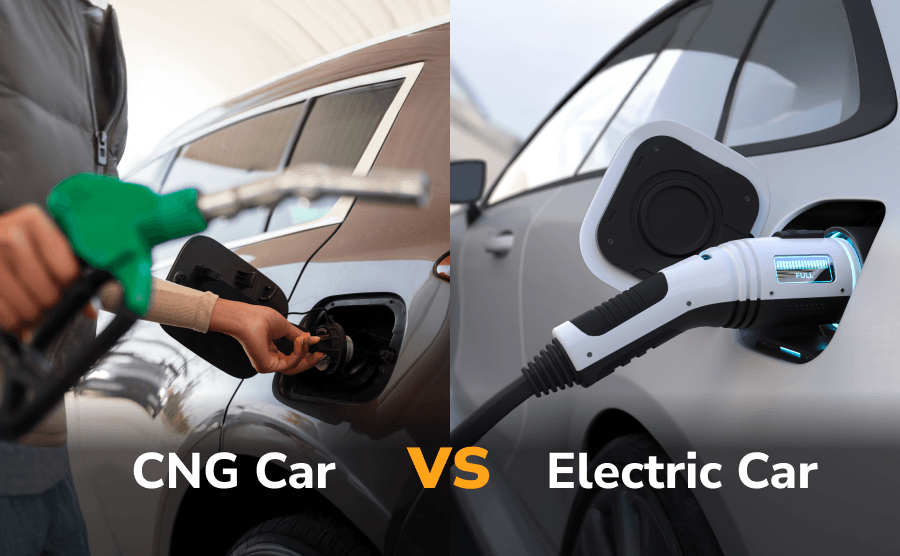
The Clash for Affordable Running Costs
As we enter April 2026, the discussion around petrol and diesel alternatives has faded. The real choice now revolves around Electric Vehicles (EVs) and CNG cars.
Both options significantly lower monthly expenses compared to petrol, catering to different preferences based on usage patterns, budgets, and driving conditions.
1. Initial Cost & Financial Considerations
CNG clearly outshines in terms of upfront costs. A factory-fitted CNG version usually costs between ₹90,000 and ₹1 Lakh more than its petrol variant.
Although EV battery prices have dropped in 2026, they still maintain a price premium ranging from ₹3 Lakh to ₹4 Lakh over conventional internal combustion engine (ICE) models. While the running cost of an EV is about ₹1/km in contrast to CNG's ₹3/km, it demands years of consistent daily driving to recover the EV's initial extra cost.
2. Convenience & Charging Infrastructure
If you have a dedicated parking space with a home charger, owning an EV is exceptionally convenient—you can wake up every morning with a 'full tank.' However, depending solely on public fast chargers remains a cumbersome task in 2026.
Although CNG infrastructure has seen tremendous advancements, you may still encounter waiting times at fuel stations. Thankfully, newer twin-cylinder technology in vehicles from Tata and Hyundai has resolved the previous issue of sacrificing trunk space.
3. Driving Experience
In urban settings, EVs provide a superior driving experience. Their instant torque, quiet interiors, and single-speed automatic transmissions make them incredibly smooth in stop-and-go traffic.
CNG vehicles now offer AMT automatic options; however, they still experience a slight power loss (around 10-15%) when running on gas compared to petrol.
Conclusion
For daily commutes under 50 km, lacking home charging, or for those frequently taking highway trips, opting for a CNG SUV or hatchback emerges as the most financially sensible decision.
Conversely, if you drive more than 60 km daily, have the ability to charge at home, and seek a premium, quiet, zero-emission driving experience, investing in an EV makes perfect sense.
Suggested Posts
Read another story from GaadiCharcha.