blog
Tesla Flying Car: SpaceX Thrusters, eVTOL Tech & The Next Frontier of Flight
Is a Tesla flying car science fiction or imminent reality? From Elon Musk's SpaceX package thrusters to autonomous eVTOL aerial transport, here is how Tesla could conquer the skies.
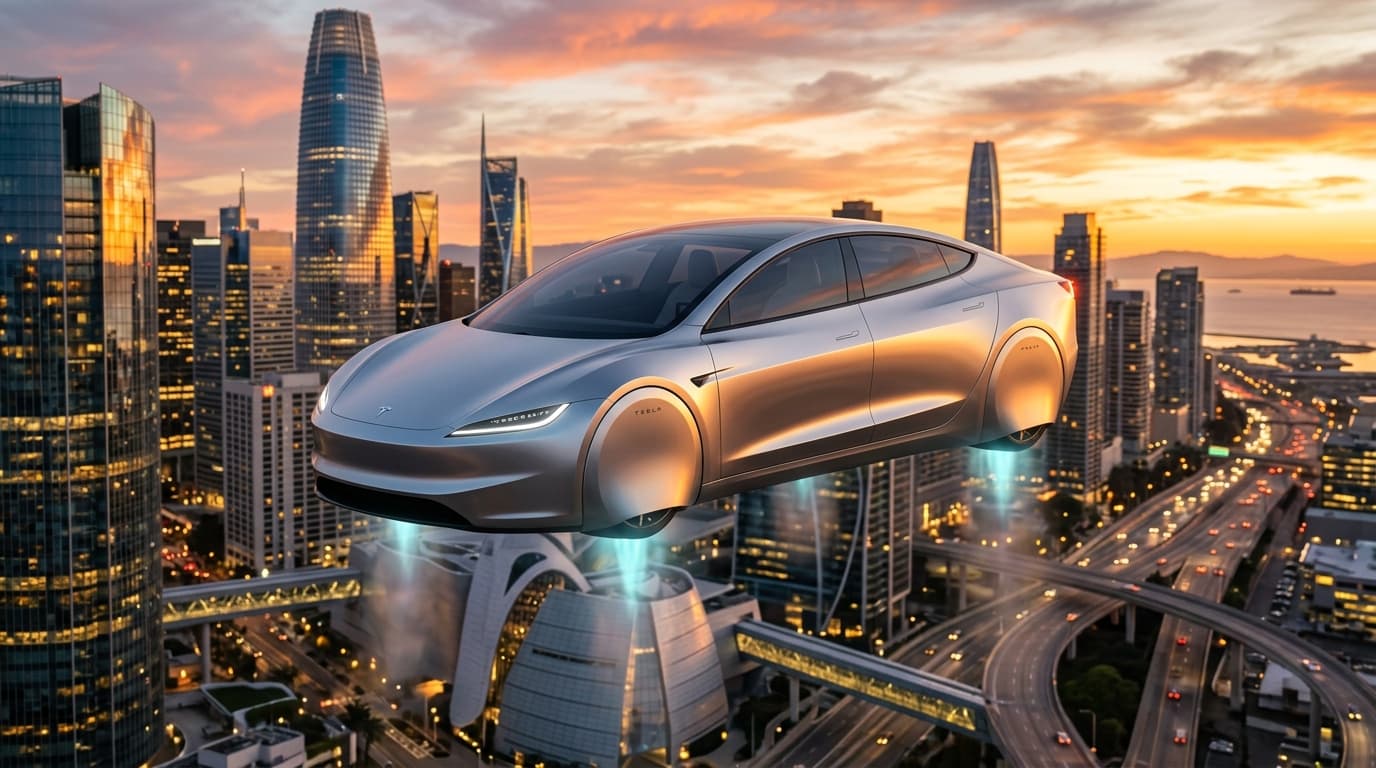
The SpaceX Thruster Synergy: Hovering and Sub-1s Acceleration
Ever since Elon Musk teased the Tesla Roadster's 'SpaceX package' equipped with ultra-high pressure cold-gas air thrusters, the automotive and aerospace worlds have been obsessed with one question: can a Tesla actually hover?
While prolonged aerial flight poses steep aerodynamic and energy density challenges, composite overwrapped pressure vessels (COPV) and rocket-derived thrusters allow instantaneous torque vectoring, micro-flight hops, and unprecedented lateral grip.
The Rise of eVTOL: Could Tesla Build an Autonomous Aero-Car?
Beyond short bursts of rocket thrusters, the true evolution of personal flying vehicles lies in Electric Vertical Takeoff and Landing (eVTOL) aircraft. With Tesla's proprietary 4680 battery cells, silicon-carbide inverters, and high-efficiency electric motors, the company possesses almost all core building blocks required for electric flight.
Combined with Tesla's Full Self-Driving (FSD) neural networks, an aerial Tesla wouldn't require manual pilot licensing—instead relying on 3D autonomous airspace management to navigate sky corridors safely.
Regulatory Airspace vs. The Grid: What Still Stands in the Way
The biggest hurdle isn't merely propulsion physics; it is civil aviation certification and municipal acoustic limits. Modern ducted fan systems and distributed electric propulsion are becoming quiet enough for suburban operation, but FAA and DGCA air corridors will take years to catch up.
Nevertheless, as battery energy density crosses the critical 400 Wh/kg threshold, Tesla's intersection of aerospace and electric mobility places it in prime position to define the flying car category.
Comparison
- Metric
- Tesla Aerial Vision vs Ground Supercars
- Propulsion Type
- Electric Motors + Cold Gas Rocket Thrusters
- 0-100 km/h Projection
- Under 1.0 second (with thrusters engaged)
- Navigation Paradigm
- Autonomous 3D Vector Flight Corridors
Suggested Posts
Read another story from GaadiCharcha.