blog
Ethanol Transformation: Why Flex-Fuel Vehicles Are Set to Dominate the Mass Market
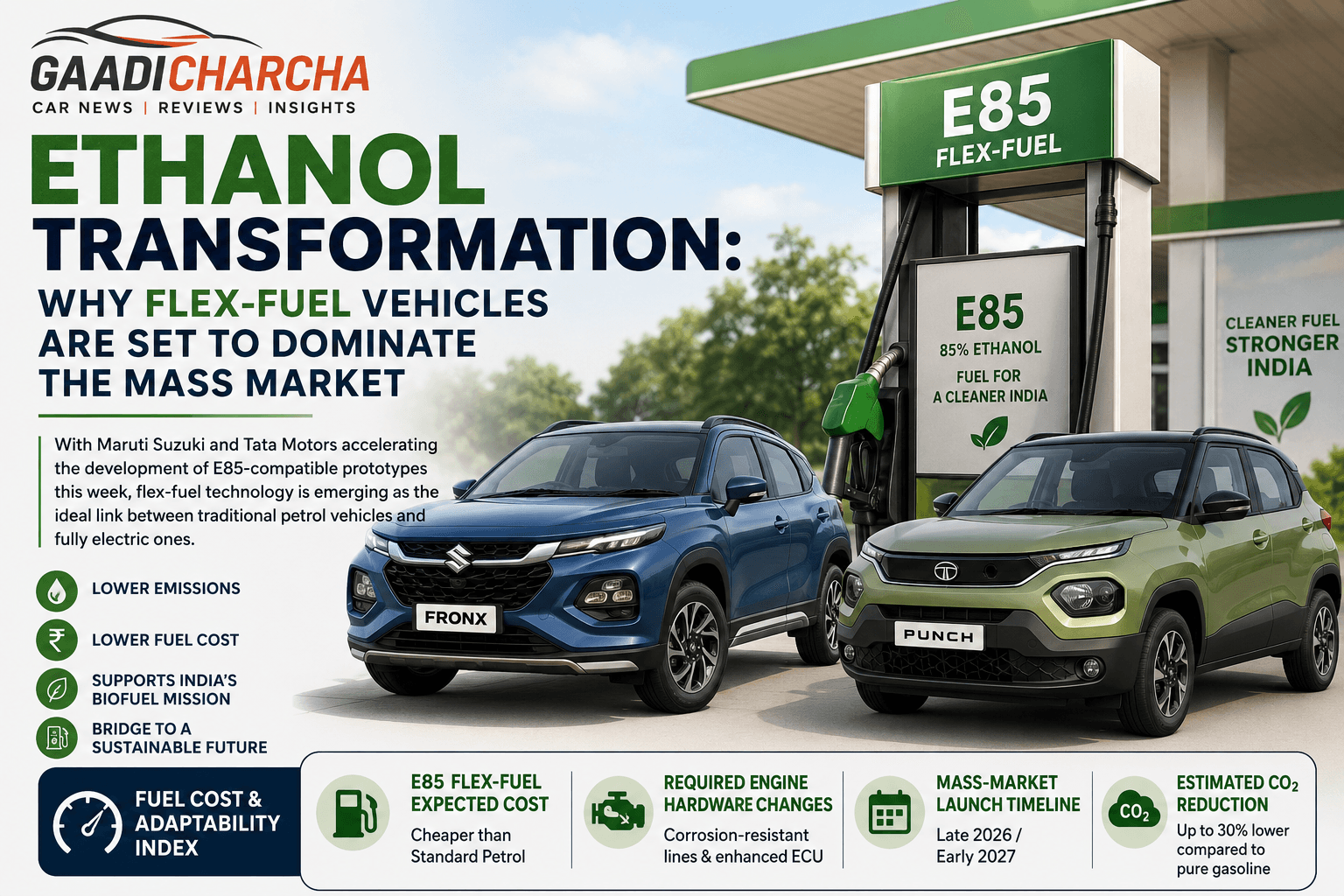
With Maruti Suzuki and Tata Motors accelerating the development of E85-compatible prototypes this week, flex-fuel technology is emerging as the ideal link between traditional petrol vehicles and fully electric ones.
The Strategic Move Towards E85
As the pressure for crude imports increases, the Indian government’s strong promotion of the National Biofuel Policy is reshaping automotive design strategies. Manufacturers are advancing beyond basic E20 compliance to introduce entry-level vehicles that fully utilize E85 flex-fuel.
Industry analysts report an impressive 45% increase in online searches for 'affordable flex-fuel vehicles' following rumors that the nation’s top-selling sub-compact crossovers are nearing final testing.
What It Means for Everyday Drivers
Flex-fuel engines are equipped with upgraded fuel injection systems and durable tank liners to effectively handle corrosive ethanol mixtures. The main appeal for consumers lies in cost—ethanol blends are expected to be significantly less expensive per liter compared to premium petrol.
Although the thermal efficiency may slightly decrease with higher ethanol blends, the customized engine tuning ensures that throttle response and power delivery remain sharp for city driving.
Comparison
- Metric
- Fuel Cost & Adaptability Index
- E85 Flex-Fuel Expected Cost
- Cheaper than Standard Petrol
- Required Engine Hardware Changes
- Corrosion-resistant lines & enhanced ECU
- Mass-Market Launch Timeline
- Late 2026 / Early 2027
- Estimated CO2 Reduction
- Up to 30% lower compared to pure gasoline
Suggested Posts
Read another story from GaadiCharcha.