blog
The Hybrid Transition: Why Plug-In Hybrids are Becoming India's Ultimate Highway Answer
As premium buyers seek zero-emission city commuting without sacrificing cross-country touring range, Plug-In Hybrid (PHEV) options are locking down sudden momentum.
The Evolution Past Traditional Strong Hybrids
A major mechanical trend redefining premium automotive pipeline logs this week is the rapid introduction of advanced Plug-In Hybrid Electric Vehicles (PHEVs). While standard self-charging strong hybrids have successfully optimized urban fuel delivery, tech-first car buyers are migrating toward platform configurations that integrate substantial standalone lithium battery packs.
This architectural update bridges a critical gap. By letting owners top up via domestic power outlets, the system delivers an authentic, quiet electric-only driving range of up to 100 km for daily office runs, completely eliminating internal combustion usage within city perimeters.
Solving the Regional Expressway Conundrum
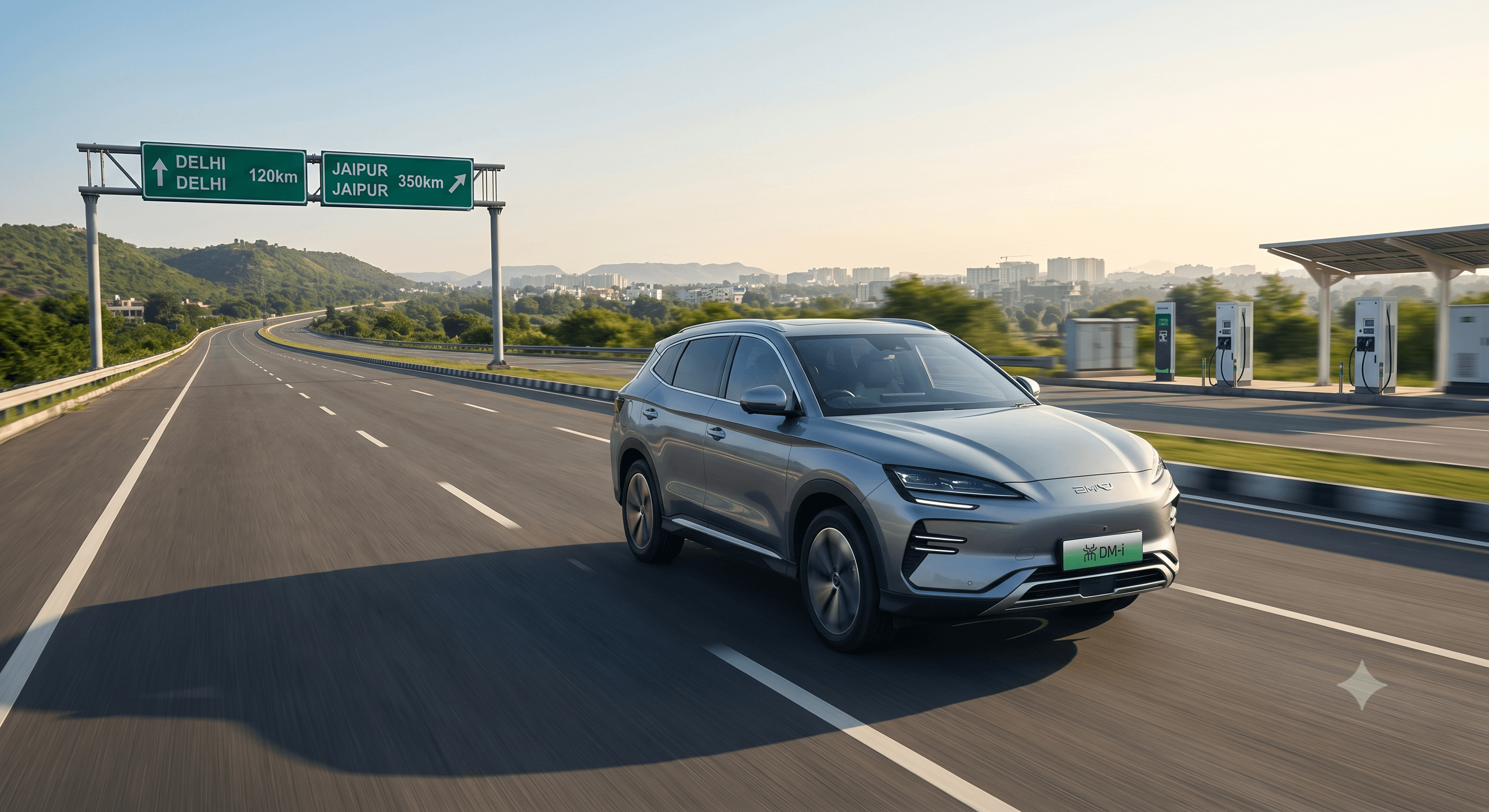
The ultimate push driving this mid-year segment expansion is long-range infrastructure insulation. When crossing interstate highways during peak travel cycles, PHEVs bypass long fast-charging queues entirely by seamlessly transitioning to an on-board turbo-petrol generator layout.
Digital portal traffic tracks an immediate 48% jump in consumer search parameters for 'upcoming plug-in hybrid SUVs,' prompting luxury brands like Mercedes-Benz and BYD to fast-track localized assembly hubs ahead of the upcoming monsoon cycle.
Comparison
- Metric
- Premium Powertrain Operating Matrix
- Typical PHEV Standalone Battery Range
- 80 km - 126 km (Claimed)
- Urban Commuting Cost Profile
- Completely Equal to Pure EVs
- Expressway Range Anxiety Penalty
- Zero (Fossil Fuel Generator Back-up)
- Primary Structural Drawback
- Higher Long-Term Dual-Motor Component Complexity
Suggested Posts
Read another story from GaadiCharcha.